
Why Professional Asbestos Removal Matters
The Hidden Dangers of Asbestos: Why Professional Removal Matters
Asbestos is one of those hidden dangers that many property owners never think about until a renovation, repair, or demolition project brings it to light. Once widely used in construction because of its strength, durability, and resistance to heat, asbestos can still be found in older homes, offices, schools, warehouses, and commercial buildings.
The problem is not always the presence of asbestos itself. The real danger begins when asbestos containing materials are damaged, disturbed, or improperly removed, releasing microscopic fibers into the air. These fibers can be inhaled and may lead to serious health problems, sometimes decades after exposure.
For homeowners, business owners, and property managers across Kentucky, Ohio, and West Virginia, understanding the risks of asbestos and knowing when professional asbestos abatement is necessary can help protect occupants, workers, and the surrounding environment.
What Is Asbestos and Why Was It Used?
Asbestos is a naturally occurring group of fibrous minerals that was widely used in building materials throughout much of the twentieth century.
Its heat resistance, durability, and insulating properties made it particularly useful in residential, commercial, and industrial construction.
Asbestos was commonly used in:
Pipe and boiler insulation
Vinyl flooring and floor adhesives
Ceiling tiles and textured ceilings
Roofing shingles and siding
Wall insulation and joint compounds
Cement boards and building panels
Furnace and heating system insulation
Fireproofing materials
Certain HVAC insulation components
Although asbestos use has been heavily restricted, many older buildings still contain these materials.
This means that even a routine remodeling project, plumbing repair, flooring replacement, or demolition can potentially disturb asbestos if the materials have not been identified beforehand.
Why Is Asbestos Dangerous?
The greatest risk associated with asbestos comes from breathing airborne asbestos fibers.
When asbestos containing materials are cut, drilled, sanded, broken, or demolished, microscopic fibers can become airborne. Because these fibers are extremely small, they may be inhaled without anyone realizing they are present.
Over time, asbestos exposure can contribute to serious health conditions, including:
Mesothelioma
Mesothelioma is a rare but aggressive cancer primarily affecting the lining of the lungs or abdomen. Asbestos exposure is the leading known cause of this disease, and symptoms may not appear until decades after exposure.
Lung Cancer
Asbestos exposure increases the risk of developing lung cancer. This risk becomes significantly greater among people who also smoke.
Asbestosis
Asbestosis is a chronic lung disease caused by inhaling asbestos fibers. It leads to scarring of lung tissue, which can make breathing increasingly difficult.
Other Respiratory and Health Problems
Asbestos exposure can also cause pleural thickening, pleural plaques, and other asbestos related diseases. Certain cancers, including cancers of the larynx and ovaries, have also been linked to asbestos exposure.
One of the most concerning aspects of asbestos is that exposure does not necessarily cause immediate symptoms. Someone may inhale asbestos fibers today and develop a related illness many years later.
Where Can Asbestos Be Found in Older Buildings?
Asbestos may be present in residential, commercial, and industrial properties, particularly those built or renovated during periods when asbestos containing products were widely used.
Common areas of concern include:
Attics and insulation: Older insulation, including certain vermiculite products, may contain asbestos.
Floors: Vinyl floor tiles, sheet flooring, and adhesives may contain asbestos.
Walls and ceilings: Some textured coatings, ceiling tiles, patching compounds, and fireproofing materials may contain asbestos.
Pipes and mechanical systems: Older heating pipes, boilers, furnaces, and mechanical equipment may have asbestos insulation.
Roofing and siding: Certain older roofing shingles, siding panels, and cement products may contain asbestos.
Asbestos cannot be reliably identified simply by looking at a material. Professional sampling and laboratory testing are necessary to confirm whether asbestos is present.
Does All Asbestos Need to Be Removed?
Not necessarily.
Asbestos containing materials that are intact, undamaged, and unlikely to be disturbed may sometimes be safely managed in place.
However, professional asbestos abatement becomes important when materials are damaged, deteriorating, or likely to be disturbed during renovation, demolition, or repair work.
Situations that may require asbestos removal include:
Renovating older buildings
Demolishing structures
Removing old flooring or ceilings
Replacing asbestos insulated pipes
Repairing damaged insulation
Removing deteriorating asbestos containing materials
Performing major commercial property upgrades
Restoring buildings after certain fire or water damage events
Depending on the material and its condition, professional encapsulation or enclosure may also be an appropriate solution.
The important thing is to have potentially hazardous materials evaluated before beginning work that could release asbestos fibers.
Why DIY Asbestos Removal Is Dangerous
Removing asbestos is not the same as removing ordinary drywall, flooring, or insulation.
Improper handling can release microscopic fibers into the air, potentially exposing property occupants, workers, and anyone nearby.
Using household vacuums, sweeping debris, sanding surfaces, or breaking asbestos containing materials without proper precautions can spread contamination beyond the original work area.
Professional asbestos abatement involves specialized procedures designed to minimize fiber release and safely manage contaminated materials.
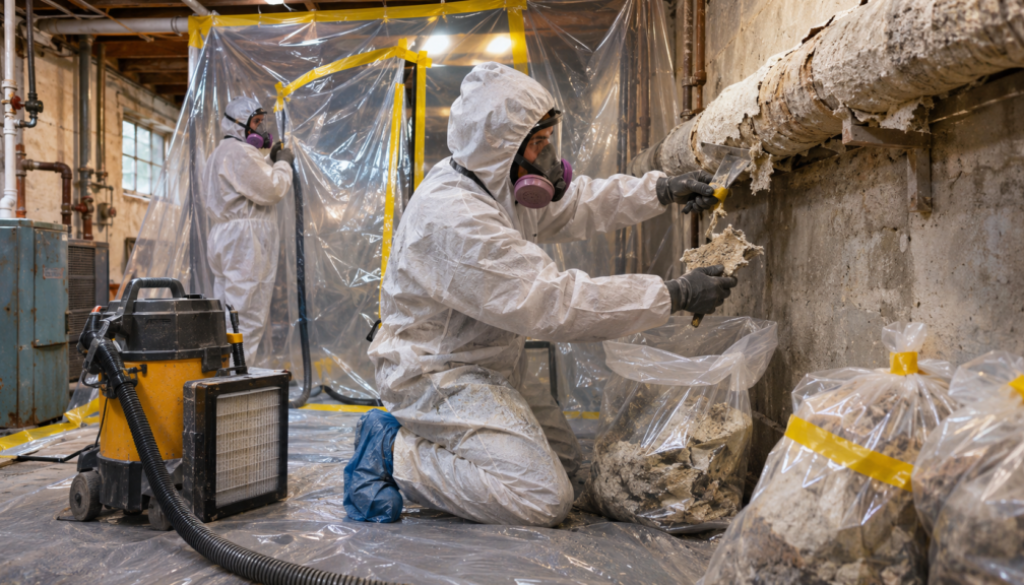
Depending on the project, these procedures may include containment barriers, controlled work areas, appropriate respiratory protection, specialized filtration equipment, regulated waste handling, and proper disposal.
Trying to save money through improper asbestos removal can create much greater health, safety, and cleanup concerns.
What Happens During Professional Asbestos Abatement?
Professional asbestos removal follows a structured process designed to minimize exposure and control contamination.
1. Inspection and Assessment
Before removal begins, the affected areas are evaluated to identify suspected asbestos containing materials and determine the scope of work. Appropriate testing helps confirm which materials contain asbestos.
2. Planning and Containment
The abatement plan considers the type and condition of the material, required safety precautions, and applicable regulations.
Containment measures are established where needed to help prevent asbestos fibers from spreading into unaffected areas.
3. Controlled Removal
Trained asbestos abatement personnel remove affected materials using approved procedures and specialized protective equipment.
The methods used depend on the material, its condition, and the requirements of the project.
4. Cleaning and Waste Disposal
Asbestos containing waste is properly packaged, transported, and disposed of according to applicable regulations.
Affected work areas are cleaned using appropriate procedures to minimize residual contamination.
5. Final Inspection and Clearance
Depending on the project and applicable requirements, post abatement inspections and independent clearance testing may be performed before the affected space is returned to normal use.
The goal is to complete removal safely while protecting building occupants, workers, and surrounding areas.
Why Asbestos Abatement Matters Before Renovation or Demolition
Renovation and demolition projects are among the most important situations in which asbestos hazards must be considered.
Removing walls, replacing flooring, upgrading mechanical systems, or demolishing older structures can disturb asbestos containing materials that have remained undisturbed for years.
Commercial and institutional properties may also be subject to specific asbestos inspection, notification, removal, and disposal requirements.
Federal asbestos regulations, along with state requirements in Kentucky, Ohio, and West Virginia, govern many asbestos related activities.
Identifying asbestos before construction begins helps property owners and contractors plan the work safely, reduce the potential for exposure, and avoid preventable compliance problems.
For businesses, taking the proper precautions can also help prevent unexpected project interruptions and additional cleanup expenses.
Professional Asbestos Removal in Kentucky, Ohio, and West Virginia
Asbestos hazards are not limited to one type of property. Older homes, commercial buildings, industrial facilities, warehouses, offices, and other structures may contain materials that require professional attention.
RestorationRX now provides asbestos abatement and removal services across Kentucky, Ohio, and West Virginia.
Our service region includes communities such as Ashland, Russell, Morehead, Pikeville, and Prestonsburg in Kentucky; Portsmouth, Chillicothe, Marietta, and Ripley in Ohio; and Charleston, Hurricane, and surrounding areas in West Virginia.
Whether you are planning a renovation, preparing a commercial property for demolition, or addressing potentially hazardous materials discovered during restoration work, taking the appropriate steps before disturbing suspected asbestos is essential.
Contact RestorationRX for Professional Asbestos Abatement
Asbestos is a serious health hazard, but the risks can be managed through proper identification, safe handling, and professional abatement when necessary.
The most important rule is simple: If you suspect asbestos, do not disturb it until it has been properly evaluated.
RestorationRX provides asbestos